

Heartworm disease is an uncommon yet potentially devastating disease for cats. It can be difficult to detect and even hard to treat once the parasites reach the adult stage. Asthma-like symptoms in an otherwise healthy cat are a telltale sign of an infestation and should be addressed immediately with your veterinarian.
If your cat has developed symptoms, your first instinct might have been to search online for answers. At Crosslake Veterinary Hospital, we work hard to bring you factual information you can trust, especially with a topic as serious as cat heartworm. We’ve taken the most frequently asked questions about cat heartworm and answered them as thoroughly and accurately as possible.
If you’re looking for a highly trained veterinarian in Crosslake, MN, we’d love to see your cat for heartworm prevention, so please call us at (218) 692-4400.
What is heartworm in cats?
Cat heartworm is a blood-borne parasite. The severity of the infestation depends on factors such as the number of worms present, how long the infection has been developing, and the individual cat's immune response.
Although heartworm is commonly associated with dogs, cats react very differently because they are not natural hosts. Instead of typical symptoms, cats often develop asthma-like respiratory issues as the immature worms migrate through the body.
In many cases, cats can eliminate the infection on their own. However, this process can still cause significant inflammation and damage. Heartworm disease is considered less common in cats, but this may be due to the lack of reliable diagnostic testing, meaning cases are likely underreported.
How do cats get heartworm?
Cats get heartworm by being bitten by a mosquito, just like dogs. A mosquito takes blood from an infected animal, and when it bites your cat, it injects immature larvae, which infects them with heartworm. These larvae migrate through the body over several months, eventually reaching the heart and pulmonary arteries. Around six months after infection, they can mature into adult worms and begin reproducing. At this stage, the disease can become life-threatening.

What do you recommend as heartworm prevention for cats?
Heartworm prevention is the safest and most effective way to protect your cat.
Preventative options include:
- Oral medication
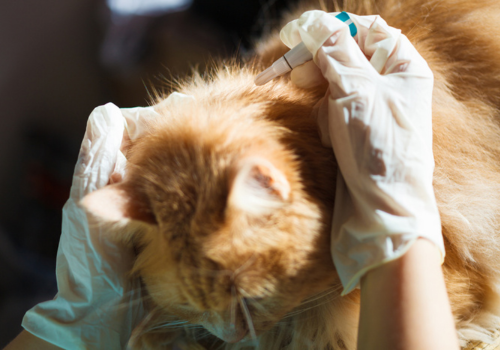
- Topical treatments applied to the skin
Many cats tolerate topical products better than pills, making them a preferred option for many pet owners.
How do you spot heartworm symptoms in a cat?
Heartworm symptoms in cats are very asthma-like, making it somewhat easy to identify unless your cat has advanced lung disease with these symptoms already present.
Symptoms of heartworm in cats include:
- Coughing, possibly due to fluid in the lungs
- Open-mouth breathing
- Panting
- Labored breathing
- Vomiting
- Convulsions
- Lethargy
- Weight loss
How does a veterinarian diagnose heartworm in a cat?
Unfortunately, there isn’t a standard test used for diagnosing heartworm in cats, as there is for dogs. Instead, veterinarians must run a series of tests to determine that heartworm is causing the symptoms.
Veterinarians diagnose heartworm in cats with the following tests:
- Urinalysis
- Heartworm antibody test to determine if a cat's immune system has been exposed to heartworms
- Heartworm antigen test to determine the presence of adult female heartworms
- X-rays to view the size and shape of a cat's heart since cats with heartworm develop enlarged pulmonary arteries
- Ultrasound to view the internal structures of the heart and surrounding vessels
- White Blood Cell Count measured, specifically eosinophils which occur in higher numbers when heartworm is present
Cat heartworm diagnosis is challenging because the damage is usually done from the migrational state or the larvae. The larvae migrate, causing a tremendous immune response in the cat because their immune system doesn’t want them there. As the worms arrive in the cat’s lungs, the immune system destroys them, but they cause so much inflammation that they have a significant asthma-like reaction. The American Heartworm Society provides insight on what steps you should take if your cat tests positive for heartworm disease.
Why is early detection and diagnosis of heartworm in cats important?
Early heartworm detection in cats is critical since the lung damage is permanent, and those asthma-like symptoms don’t disappear. Also, if the worms become adults, 12-inch worms can coil around a cat’s tiny heart. A single worm can be devastating to a cat since there is no conventional heartworm treatment if they develop adult worms. The worms can only live a couple of years in a cat since it’s not a natural host, and unfortunately, once the worms die, the inflammatory reaction of decaying worms causes the cat to die with them. Heartworm prevention in cats is critical because once they get an infestation and it reaches adulthood, it's fatal most of the time.
The AVMA offers additional insight into heartworm disease.
At Crosslake Veterinary Hospital, your pet is our priority. If you have any questions, don't hesitate to call our team at (218) 692-4400, or you can email us at [email protected]. Our staff would love to talk with you!
Don't forget to follow us on social media: Facebook, Instagram.